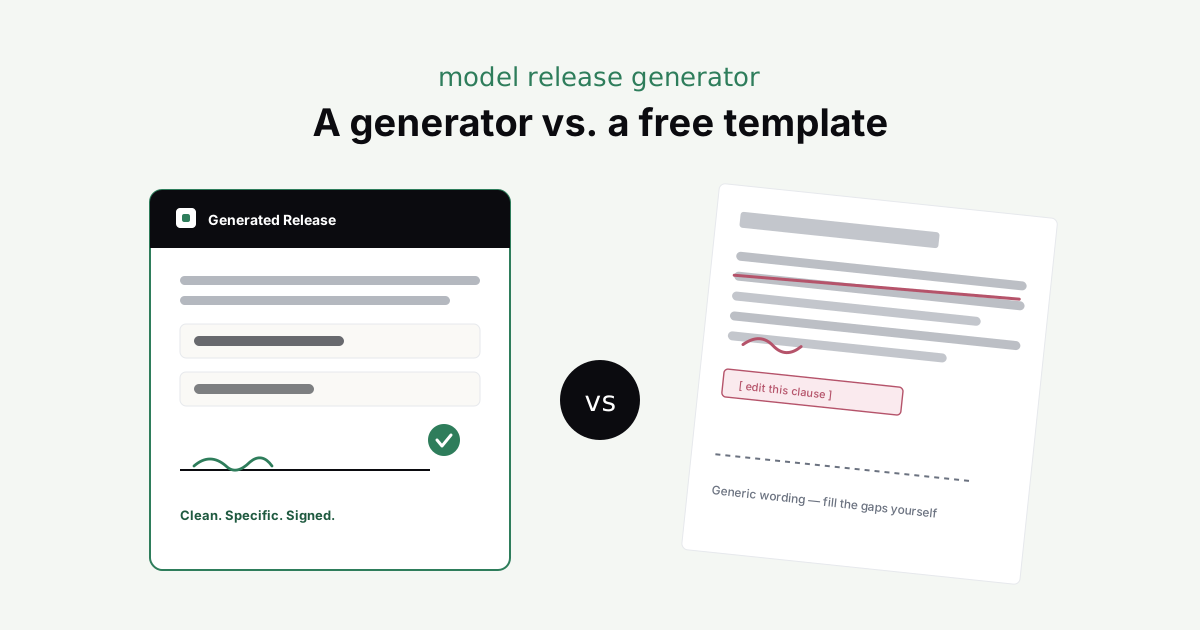
Search "free model release template" and you will get hundreds of results: Google Docs files, PDF downloads, template-mill pages. They cost nothing, and for some shoots that is genuinely fine. This guide is the honest case for when a free template works, when it quietly fails you, and what a generator does differently.
When a free template is fine
If you are shooting for personal use, a portfolio piece nobody will ever license, or a low-stakes favor for a friend, a free template you downloaded and skimmed is probably fine. The release is a courtesy more than a shield, and a generic one does the job.
There is no need to overspend on paperwork for a shoot that will never go commercial. Be honest with yourself about which category a shoot is in — most are not this one.
Where free templates quietly fail
The trouble starts the moment a shoot goes commercial. Free templates have three recurring problems, and none of them announce themselves.
First, they are generic. A free model release is written to apply to everyone, everywhere, which means it is specific to no one. It rarely names a real usage scope; it just says "any and all media" and hopes.
Second, they are not state-aware. The legal backing for a release genuinely differs by state — a California release leans on Civil Code §3344, a New York release on the written-consent rule in Civil Rights Law §50, a Florida release on §540.08, an Illinois release on the Right of Publicity Act, and Texas has no living-person publicity statute at all, so claims there rest on common-law misappropriation. A single free template cannot reflect five different rules.
Third, you are editing a stranger's file. You do not know who wrote that Google Doc, when, or whether the placeholders are all caught. Every edit is a chance to leave "[PHOTOGRAPHER NAME]" sitting in the final document — or worse, to delete a clause that mattered.
What a generator does differently
A model release generator does not hand you a file to edit. It asks questions and builds the document.
With SignedShoot's model release form generator, you answer a short set of questions — the shoot, the subject, the usage scope, the term, the state — and the release is assembled around those answers. There is no placeholder to miss, because there are no placeholders. The state-specific wording is applied because you told it the state.
Here is the part most people miss: the preview is free and fully usable. SignedShoot generates a complete, watermarked PDF at no cost. If all you need is a release for a personal shoot, the free preview is a real, signable document — you do not have to pay anything.
You pay only to unlock the branded, editable version: your studio logo and details on the document, the watermark removed, and an editable Microsoft Word .docx you can adjust if a client needs a clause changed. That unlock is a one-time $29 for a single release type, or $49 for all seven with the Forms Pack. No subscription.
The honest comparison
So the real comparison is not "free vs. paid." It is "a generic file you edit yourself" vs. "a generated release with state-aware wording, where the preview is already free and you pay once for branding and an editable file."
For a wedding photographer handing a guest a release to sign on their phone, or a newborn and family photographer who needs a parent's consent captured correctly, that difference is the gap between paperwork that holds and paperwork that hopes.
None of this is legal advice. SignedShoot provides document templates that reflect standard industry practice — it does not replace a lawyer for a lawyer-grade question. But for the everyday release a working photographer needs before a shoot, a generated, state-aware document beats a stranger's Word file.
The takeaway
Free templates are fine for shoots that will never go commercial. For anything that will, a free template is generic, not state-aware, and risky to edit. A generator fixes all three — and with SignedShoot the preview itself is free, so you can see the document before you decide.
Frequently asked questions
- Is a free model release template good enough?
For personal or low-stakes shoots that will never be used commercially, often yes. For commercial use — advertising, selling images, stock — a generic free template is rarely state-aware and is risky to edit, which is where a generator helps.
- Does SignedShoot cost money to try?
No. The watermarked PDF preview is free and is a complete, signable document. You pay only to unlock the branded, editable .docx version — $29 for one release type or $49 for all seven.
- Why does a state-specific release matter?
The legal backing for a release differs by state — California's §3344, New York's §50, Florida's §540.08, Illinois' Right of Publicity Act, and Texas' common-law rule are all different. One free template cannot reflect five different rules.
- What is the risk of editing a free template?
You are editing a file written by someone you cannot identify. It is easy to miss a placeholder, leave bracketed text in the final document, or delete a clause that mattered. A generator builds the document instead of leaving you to edit it.
- Is a generated release legal advice?
No. SignedShoot provides document templates that reflect standard industry practice, not legal advice. For a lawyer-grade question about your specific situation, consult a lawyer.