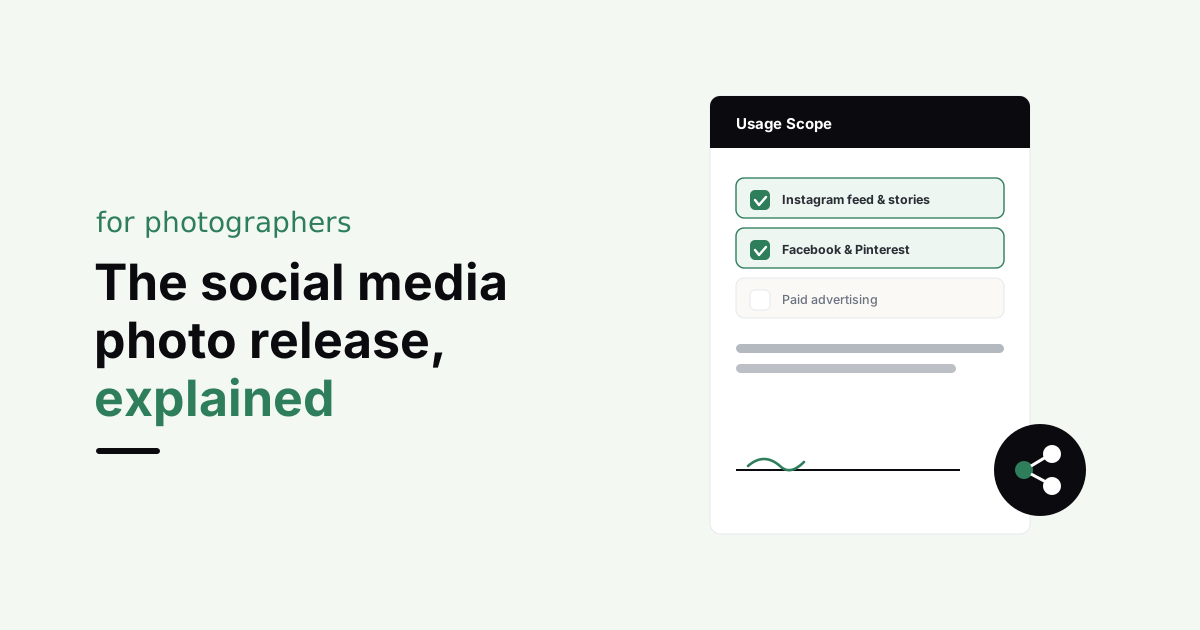
"Social media photo release" is one of the most-searched release phrases, and for good reason: posting a client's image on a public platform is the single most common source of after-the-fact disputes in photography. This guide is the complete picture — what a social-media release actually is, why posting deserves its own permission, how the major platforms differ, when minors change the calculation, and what to expect if a subject later asks for a photo to come down.
What a social-media photo release is
A social-media photo release is not a separate document type. It is a model, minor, or property release in which the usage scope explicitly names social media as a permitted use. The "social-media release" is really a normal release, scoped so posting on Instagram, TikTok, or YouTube is named rather than implied.
The phrase exists because photographers and clients both intuit that posting is different from other uses — and they are right. A release that only says "promotional use" leaves a working photographer guessing about whether a public Instagram post is covered. Naming social media as its own line removes the guesswork. It tells the subject exactly what they are agreeing to, and it tells you, six months later, exactly what you were granted. Nobody has to reconstruct intent from a vague clause.
The document is generated the same way as any other release: you fill a short form, pick the usage scope, and the model release form generator builds the release with social media named as a permitted use. There is no separate "social media template" to hunt down — there is just a release done properly.
Why posting is a distinct kind of use
Posting is the most exposed thing you can do with a photo. It deserves its own line in the release because it carries risks the other uses simply do not.
Consider the difference between three uses of the same photo:
- It goes into a private client gallery. Only the client and the people they share the link with ever see it.
- It goes into your portfolio. People who deliberately seek out your work see it, in a context you control.
- It goes on your public Instagram grid. Anyone, anywhere, indefinitely, can see it — and it can be screenshotted, reposted, fed to a stranger by the algorithm, and resurfaced years later.
Public social media is the most exposed of these by a wide margin. A subject can be entirely comfortable with the first two and genuinely uncomfortable with the third. The reasons are real: a public post is permanent in practice even after you delete it, it strips context, it is searchable, and it puts the subject in front of an audience they never chose. A release that lumps all three uses together as "promotional use" cannot capture that distinction, and the gap is exactly where the dispute happens.
A general "promotional use" clause
Folds private galleries, portfolio, and public posting into one phrase. The subject cannot grant one without granting all, so a careful subject grants nothing.
Social media as its own scope option
Lets the subject grant website use, withhold social, or the reverse. The release records the precise posting consent the subject actually gave.
How granular scope solves it
The fix is not a longer clause. It is a release where the usage scope is a set of independent options the subject grants one at a time.
In a well-built release, the usage scope is a set of independent checkboxes — social, web, print, advertising, stock, editorial — not a single switch. The subject grants each one separately. Social media becomes a yes-or-no the subject answers on its own terms, not a rider buried inside a paragraph about marketing.
This changes the conversation. Instead of asking a subject to sign away "promotional use" and watching them hesitate, you let them say a precise yes: portfolio website, yes; public Instagram, no. The release records exactly that. You often end up with more usable permission, not less, because the document matches how people actually think about their own image. A subject who would have balked at an all-or-nothing clause will happily grant three of five options when each one is its own decision.
Granular scope also protects you. When the consent is specific, there is nothing to argue about later. A subject who checked the social-media box and signed cannot credibly claim they did not know their photo might be posted — the box is right there above their signature. Vague language is a liability for both sides; precise language is a shield for both sides.
Per-platform considerations
One release that names "social media" covers the major platforms. But the platforms are not identical, and it is worth knowing how they differ before you decide whether one scope line is enough.
You do not generally need a separate release per platform. A release that names "social media" as a permitted use covers Instagram, TikTok, YouTube, Facebook, and the rest as a category. For the large majority of shoots, that single scope is the right call — it is simple, it is clear, and it matches how subjects think ("can my photo be online or not").
Where the platforms diverge is in exposure profile, and that occasionally matters to a subject:
- Instagram and Facebook are grid-and-feed: a still image, shown to your followers and, through Reels and the Explore tab, to strangers. This is the baseline most people picture when they think "posted online."
- TikTok and Instagram Reels are algorithm-first. A clip can reach far past your follower count with no warning. A subject who is fine being seen by your audience may feel differently about a video that could be served to millions.
- YouTube is searchable and durable in a way feeds are not. A video stays findable by name for years and is indexed by search engines.
- Stories and ephemeral posts feel lower-stakes because they expire — but they can be screenshotted and saved before they do. Treat them as permanent.
For most shoots, "social media" as a single scope is correct. When a subject specifically wants to permit one platform but not another — happy to be on your Instagram grid, not in a TikTok — note the named platforms in the unlocked, editable .docx. That is the moment platform-level detail earns its place: a real, stated preference, written down where it belongs.
Model versus minor: when the rules change
Everything above assumes the subject is an adult signing for themselves. When the subject is a minor, social-media scope becomes the most sensitive line in the release.
A minor cannot grant consent to the use of their own image — a parent or legal guardian signs on their behalf. That makes the social-media checkbox a decision the parent makes about their child, and it is, predictably, the decision parents care about most. "Will my baby end up on your Instagram?" is the single most common question new parents ask a photographer.
A newborn or family release with explicit social-media consent answers that question in writing, before the session, instead of leaving it to an awkward conversation at delivery. If the parent checks the box, you can post with confidence. If they leave it unchecked, you know the images stay off your public channels — and you have a signed document proving you knew. Either way, the minor model release generator builds the guardian-consent block and the scope checkboxes into one document. Never assume a parent is fine with posting because they seemed relaxed on the day; relaxed-on-the-day is exactly the state of mind that produces a regretful message three weeks later.
What to expect on a takedown request
A signed social-media release records consent. It does not, on its own, decide what happens when a subject changes their mind.
Subjects do change their minds — a relationship ends, a job search starts, a parent reconsiders. A release with a clear social-media scope puts you in a strong position: you have written, specific permission, so a takedown request is a courtesy question, not a legal one. Many photographers honor reasonable requests anyway, because the goodwill is worth more than one post. But you get to make that call from a position of clarity rather than panic.
The cleaner approach is to plan for it. Some photographers — boudoir photographers especially — build a takedown expectation directly into the release, stating up front how a removal request will be handled and within what timeframe. That converts a tense future conversation into a term both sides already agreed to. Whatever you decide, decide it in the document, not in a stressful exchange after the fact.
The pillar and its cluster: where to go next
This article is the hub. Three companion pages take the social-media question into the specific shoot types where it bites hardest — read the one that matches your work:
- A wedding model release scoped for Instagram — couples are delighted on the day and rarely thinking about their public image. This page covers how to scope a wedding release so the images they agreed to see posted are recorded, before a relative's complaint becomes a deletion.
- Granular social-media scope for boudoir — boudoir consent is the most nuanced there is. A client might allow an anonymous, cropped post but nothing showing their face. This page covers capturing that precisely.
- A newborn release for Instagram use — the parent-consent angle in full: scoping the social-media line when the person who signs is not the person in the photo.
For the tool itself, start with the model release form generator or the broader photo release form generator — both let you preview a complete release for free and only ask for payment to unlock branding and the editable file.
The takeaway
A social-media photo release is just a release done properly: one where posting is named as its own permission instead of hidden inside a vague clause. Scope social media as a distinct option, talk through it with the subject in one sentence, account for minors and for the occasional takedown request, and the most common dispute in photography stops happening.
Frequently asked questions
- What is a social-media photo release?
It is a standard model, minor, or property release in which the usage scope explicitly names social media as a permitted use, so a subject's consent to public posting is recorded rather than assumed.
- Do I need a separate release for Instagram and TikTok?
Usually no. A release that names "social media" as a permitted use covers the major platforms as a category. Note specific platforms in the editable document only if a subject wants to permit some but not others.
- Why isn't a general promotional-use clause enough?
A general clause folds private galleries, portfolio, and public posting into one phrase. A careful subject faced with all-or-nothing tends to grant nothing. Naming social media separately lets them grant a precise yes.
- Can a subject allow website use but not social media?
Yes — that is the purpose of granular usage scope. The subject grants each option independently, so the release can permit a portfolio feature while keeping the images off public social platforms.
- How does a social-media release work for a minor?
A minor cannot consent for themselves, so a parent or legal guardian decides the social-media scope on the child's behalf. The release records that decision in writing, which is why the social-media checkbox is the line parents care about most.
- What happens if a subject later asks me to take a photo down?
A signed release with clear social-media scope means a takedown request is a courtesy question, not a legal one — you have specific written permission. Many photographers honor reasonable requests anyway, and some build a takedown process directly into the release.
- When should the social-media line be discussed?
Before the shoot, as part of normal paperwork. It is a one-sentence conversation that prevents a much harder one later.