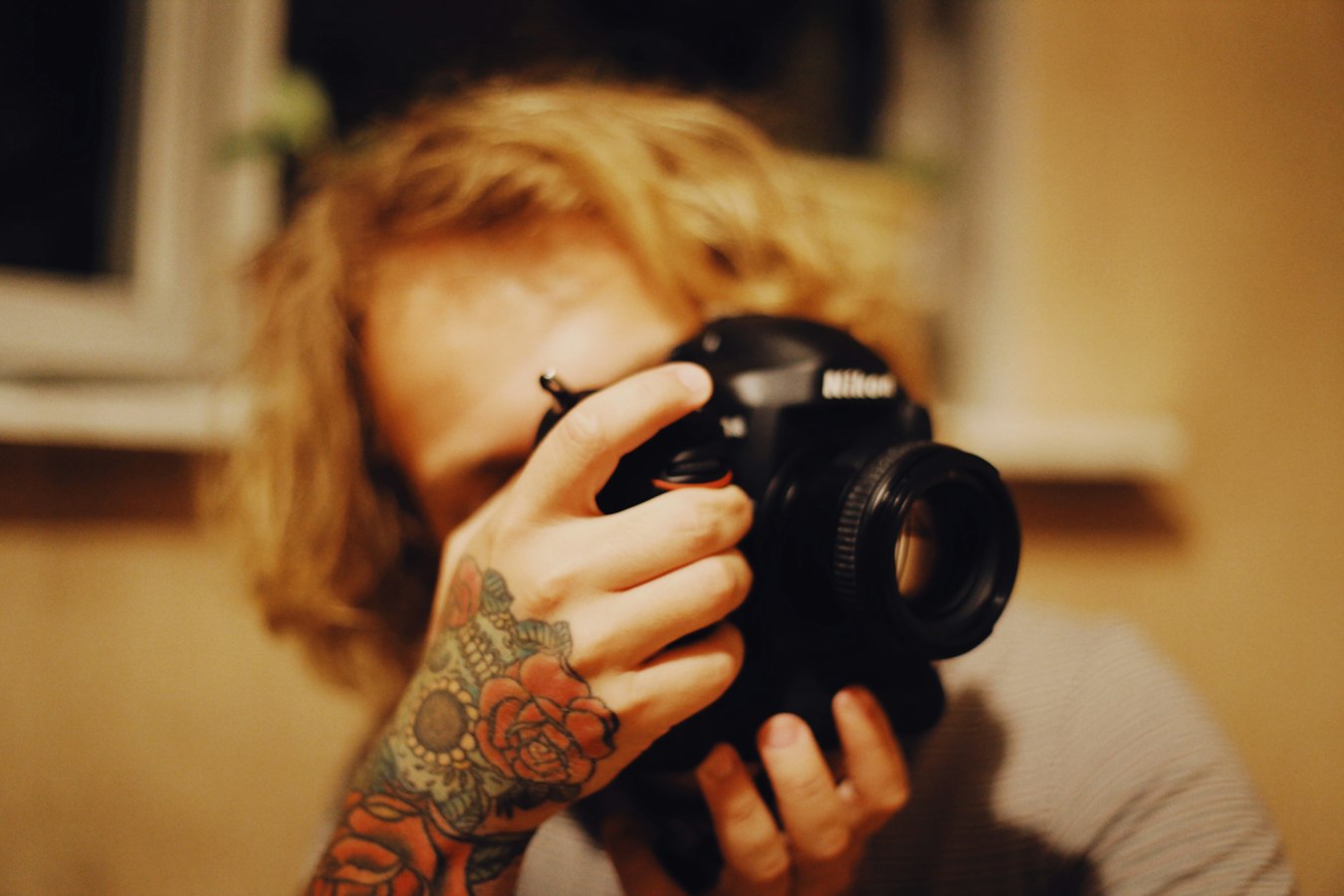
You've got a signed model release in hand. Your subject is ready. The light is perfect. But your subject has a full sleeve of custom tattoo art visible in every frame -- and the person who created that art may hold a copyright you haven't addressed yet.
This is not a hypothetical. Courts in the U.S. have treated tattoos as copyrightable artwork more than once, and major commercial campaigns have faced infringement claims from tattoo artists whose work appeared in photos and ads without permission. Understanding where your model release ends and a tattoo artist's copyright begins is practical knowledge for any working photographer -- especially if you shoot commercial work, fitness, sports, or editorial fashion.
This article is not legal advice. It lays out the copyright reality as it stands, explains how to think about risk by shoot type, and shows what your model release form should cover when a tattooed subject is in front of your lens.
Why Tattoos Can Involve Two Separate Rights Holders
A model release addresses one set of rights: the subject's right of publicity -- their right to control commercial use of their name, image, and likeness. Every state handles this differently. New York's Civil Rights Law §§ 50 and 51, Texas's Property Code § 26.012, Florida's § 540.08 -- these statutes all protect the person in the photo. Getting a signed release from your subject covers that layer.
Tattoo copyright is a separate layer entirely. Under U.S. copyright law (17 U.S.C. § 101 et seq.), an original creative work fixed in a tangible medium is protected from the moment of creation. A tattoo artist who designs and applies a unique, custom piece has almost certainly created a copyrightable work. The human skin is the medium. The copyright, unless explicitly transferred in writing, stays with the artist.
So when you photograph a subject whose visible tattoo appears prominently in your image, you may have two rights holders to think about:
- The subject -- covered by a signed model release addressing right-of-publicity concerns.
- The tattoo artist -- a potentially separate copyright holder whose work is being reproduced in your photograph.
Your model release handles the first. It does not automatically resolve the second. These are distinct legal categories, and a signed release from the subject does not transfer rights the subject does not own.
When Is a Tattoo Prominent Enough to Matter?
Not every tattoo in a frame creates the same level of concern. A few practical factors help you assess where a tattoo falls on the risk spectrum.
Recognizability. Is the tattoo a distinctive, identifiable piece of custom art -- a portrait, an intricate illustrative design, a piece with a known artist's signature style? Or is it a small generic symbol in the background of a wide shot? Highly recognizable, custom work reads as artwork. Generic flash or partial backgrounds present less concern.
Prominence in the frame. A close-up product shot where the subject's tattooed forearm fills half the frame is different from a full-length lifestyle photo where the same tattoo is barely visible. The more central and legible the tattoo is in the final image, the stronger the argument that it is being "reproduced" in a copyright sense.
Intended use. Commercial advertising use -- where the image is used to sell a product or service -- draws more scrutiny than editorial use. If you are shooting for a magazine feature about tattoo culture and the tattoo is part of the editorial story, that context differs from a national ad campaign where a tattooed arm appears next to a brand logo. See the breakdown in Model Release Form: Commercial vs. Editorial Use for how intended use affects the release side of this equation.
Custom vs. generic design. A tattoo drawn by a named artist and applied exclusively for one client carries strong originality. Stock flash designs have a murkier copyright status but can still be protected if they meet originality thresholds.
When you answer "prominent, custom, and commercial" to all three, you are in territory where the tattoo artist question deserves direct attention before images go to a client.
What Your Model Release Form Should Cover (And What It Cannot)
Your model release from the subject is still essential. It covers their right of publicity, their consent to the shoot, and the scope of use you're authorized for. A thorough release should include:
- The subject's full name, date, and signature.
- A description or reference to the shoot date, location, and intended use.
- Clear language covering the scope of commercial or editorial use.
- Compensation terms if any apply.
- A grant covering the subject's likeness, appearance, and image.
What a model release from the subject cannot do is transfer copyright in a third party's artwork. The subject did not create the tattoo. They cannot grant you rights they do not hold. Some photographers add a representation clause -- language where the subject confirms they are not aware of any third-party intellectual property claims related to their appearance. This puts the subject on record but does not replace a license from the tattoo artist.
If the tattoo is prominent and the shoot is commercial, the cleanest documentation path is to obtain a written license or permission from the tattoo artist directly, separate from the model release. This is not always practical on fast-moving shoots, but it is the most defensible approach for high-stakes commercial work.
SignedShoot helps you generate the subject-side documentation -- the model release -- quickly, on set, in PDF or .docx format. The subject's details stay in the browser and are never uploaded to a server. That handles the right-of-publicity layer cleanly. The tattoo artist question is a parallel track you address separately.
Shoot Types Where Tattoo Copyright Risk Is Highest
Some shoot types put tattooed subjects in frame far more often than others, and some use cases amplify the copyright concern significantly.
Fitness and bodybuilding photography. Tattoos are common, subjects wear minimal clothing, and the images often go to commercial clients -- supplement brands, gym chains, sportswear labels. The Fitness Social Media Photo Release: 3 Must-Have Clauses article covers the release side for fitness work; tattoo visibility is a direct extension of that concern.
Sports and athlete photography. Professional athletes frequently have prominent custom tattoos. Commercial licensing of athlete images is a high-value transaction, and the tattoo copyright question has surfaced in NBA and NFL-adjacent cases. The Model Release Form for Athletes: 3 Key Clauses article walks through the athlete-specific release landscape.
Fashion and editorial shoots. Sleeveless looks, cutouts, and swimwear make tattoos visible by design. When those images run in paid advertising, the prominence and commercial use factors both point toward higher risk.
Concert and music photography. Performers with visible tattoos appear in editorial and commercial contexts routinely. See Concert Photography Social Media Photo Release for the release framework that applies to that world.
Brand ambassador and influencer shoots. When a tattooed subject's image becomes a brand asset used repeatedly across channels, the reproduction is ongoing. The Brand Ambassador Photography Release: Key Clauses article is worth reviewing alongside this one.
Lower-risk territory generally includes: far-background group shots, highly compressed editorial images where tattoos are not legible, or work where the client has confirmed editorial-only use with no commercial licensing.
How to Document What You Have on Set
Documentation discipline on shoot day protects you regardless of how the tattoo copyright question ultimately resolves. Here is a practical approach.
Photograph the signed release alongside the subject. Time-stamp it. Know who signed what and when.
Note visible tattoos in your shoot log. A brief note -- "subject has full sleeve, right arm; custom work, artist unknown" -- creates a contemporaneous record that you identified the issue rather than overlooked it.
Ask the subject about the tattoo artist. You don't need to make this an interrogation, but if you know the work is by a named artist, you have a starting point if a client later needs to pursue a license. "Do you know who did your tattoo?" is a reasonable question.
Flag it to your client in writing before delivery. If prominent custom tattoo art appears in the selects you deliver, a brief email noting "subject has prominent tattoo on right forearm; tattoo artist license not obtained -- recommend client review before commercial use" protects you and informs the client. Put it in writing, not a verbal conversation.
Use a release generator that produces clean, timestamped documents. A watermarked preview, a signed PDF, and a clear record of scope all matter when questions arise later. Chasing paper forms after the shoot leaves gaps; getting everything signed on set is the baseline.
A Quick Pre-Shoot Checklist for Tattooed Subjects
Run through this before the first frame on any shoot where tattoos will be visible and prominent.
- [ ] Model release prepared and ready to sign on set (covers right of publicity).
- [ ] Scope of use confirmed with client -- commercial, editorial, or both?
- [ ] Tattoos visible in planned wardrobe identified in advance (ask during pre-shoot communication).
- [ ] For prominent custom work going into commercial use: tattoo artist identified, license pursued separately.
- [ ] Representation clause in release noting subject is unaware of conflicting third-party IP claims.
- [ ] Shoot log note documenting visible tattoos and known artist information (or "artist unknown").
- [ ] Delivery email to client flagging any unlicensed prominent tattoo art in final selects.
This checklist does not replace qualified legal counsel if you face a specific dispute. What it does is ensure you walked onto set with your eyes open and documented what you had -- which is the most any working photographer can do.
Tattoos are art. When that art appears prominently in your commercial images, the artist behind it may have rights worth taking seriously. Your model release covers the person in the frame. It is a critical piece of documentation -- but it is one piece, not the whole picture.